Evaluating GEO Optimization Platforms for AI Search Visibility
Why Traditional SEO Software No Longer Cuts It
For years, tracking where your brand appeared in search results meant monitoring Google Search and maybe Bing. The rules were clear: rank high on a search engine results page, get the clicks. But the rise of large language models and generative AI has flipped that model on its head. When someone asks ChatGPT a question, it often synthesises an answer on the spot, pulling from sources it deems authoritative without showing a traditional list of links. Your brand might be deeply embedded in that answer, or it might be invisible. The old SEO software was never built to detect that.
This shift is why I started looking closely at GEO optimization platforms in the first place. Not as a replacement for search engine optimization, but as a necessary overlay. If you manage brand reputation or digital presence analytics for a living, you have probably noticed that your standard rank tracker misses half the picture now. The knowledge graph that powers these AI models does not always mirror what you see in a standard web crawler report. You need tools built for the new environment.
What GEO Optimization Platforms Actually Do
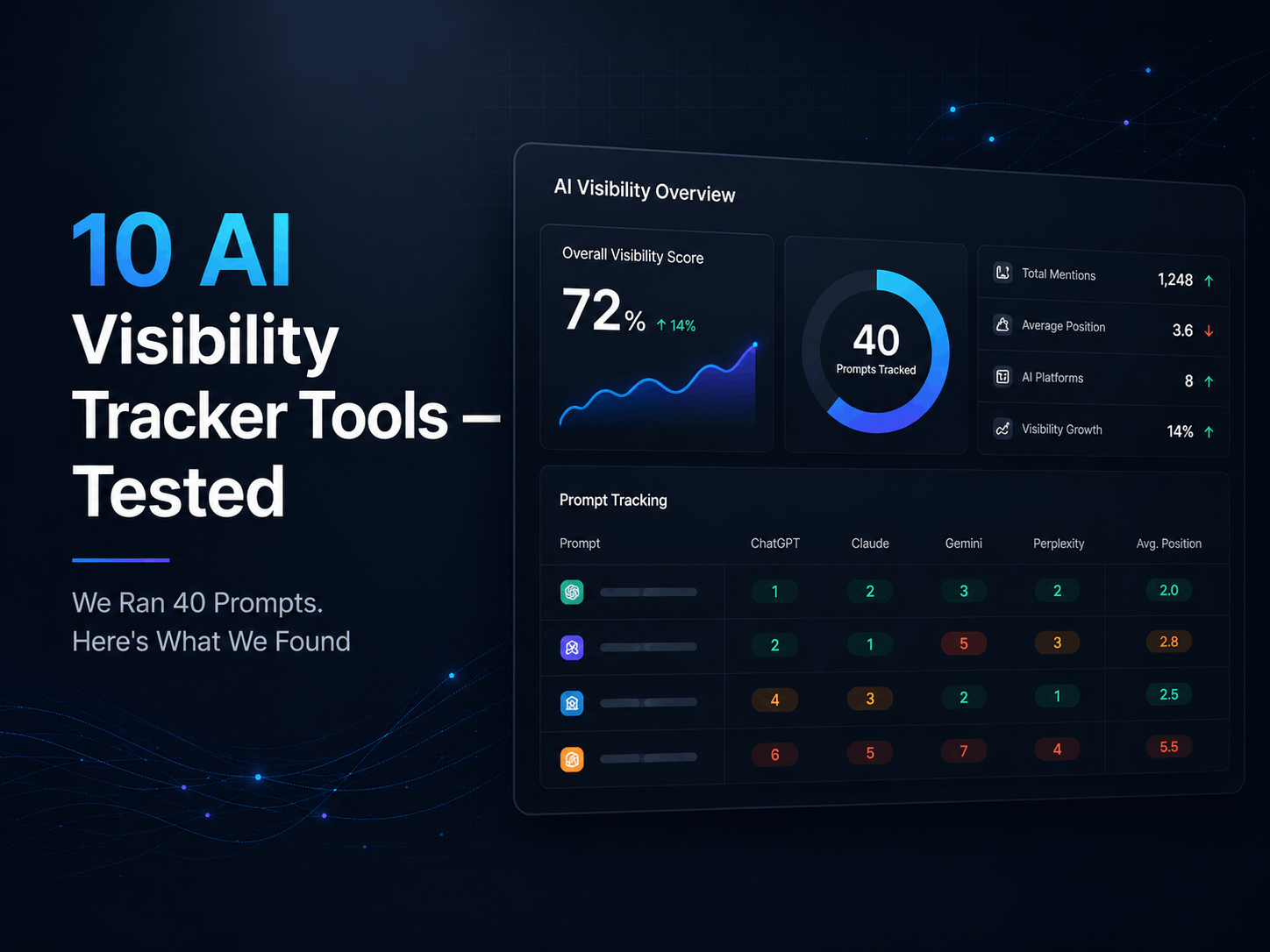
GEO optimization platforms sit at the intersection of brand monitoring and AI visibility tracking. They use their own web crawlers and entity recognition systems to figure out how large language models like Claude, Gemini, and Perplexity reference your brand. Instead of just counting backlinks or keyword density, these platforms analyse the semantic search signals that influence generative outputs. They track brand mentions inside AI-generated summaries, measure sentiment in those references, and show you which content sources are driving your inclusion in AI answers.
One practical example that stands out to me involves a client in the B2B software space. They had solid SEO rankings for a core set of terms, but when we checked their presence across ChatGPT and Perplexity, their brand was almost invisible. The culprit was not poor content quality, but a mismatch in how their site structured data for entity recognition. The GEO optimization platform we used flagged this gap within days and suggested specific markup changes. Within a month, their brand started appearing in relevant AI responses. That is the kind of concrete outcome these tools deliver.
Features That Matter in Practice
Not all GEO optimization platforms are built the same. After evaluating several, I have found a few features that separate the genuinely useful tools from the noise.
- AI content detection across multiple models. A good platform scans outputs from ChatGPT, Claude, Gemini, and Perplexity, not just one or two. Each model handles entity recognition differently, so coverage matters.
- Brand mention attribution. The tool should tell you which source pages are feeding your brand mentions into the knowledge graph. This helps you double down on what works.
- Sentiment and context analysis. It is not enough to know you were mentioned. You need to know if the mention is positive, neutral, or negative, and in what context it appears.
- Integration with existing SEO software. The best GEO tools plug into your current stack rather than replacing it. You want to see AI visibility alongside traditional search metrics.
These features sound straightforward on paper, but in practice they require sophisticated AI content detection and a constantly updated web crawler that understands how generative AI models consume information. The field is still young, and platforms vary widely in accuracy.
Trade-Offs and Practical Judgment
I have spent the last several months testing a handful of GEO optimization platforms, and I can tell you that no single tool covers every use case perfectly. Some excel at breadth but miss nuance. For example, one platform I tried did a fantastic job tracking brand mentions across Google Search and Bing, but when it came to ChatGPT and Claude, its entity recognition was too broad. It flagged mentions of competitor brands as our own. That kind of noise makes it hard to trust the data.
On the other hand, a more specialised platform focused exclusively on generative AI outputs gave incredibly precise results for Perplexity and Gemini, but ignored traditional search entirely. That left a blind spot because many users still discover brands through classic web crawler results before they ever ask an AI assistant. The lesson is that you need a combination of tools, or a single platform that bridges both worlds. The site authorityradar.com reviews exactly this kind of software, and their comparisons helped me narrow down which tools matched my actual workflow.
How GEO Optimization Changes Your Content Strategy
Once you start using GEO optimization platforms, you quickly see that the content strategy that worked for search engine optimization does not automatically translate to generative AI visibility. AI models prioritise clarity, factual consistency, and structured data. They also tend to favour sources that appear in multiple trusted knowledge graphs. If your content is well-written but lacks the right schema markup or fails to align with the entity recognition patterns used by large language models, it will not surface in AI answers.
I have found that the most effective approach is to treat your website as a data source for AI as much as a destination for human readers. That means investing in semantic search optimisation, building out topic clusters with clear internal linking, and making sure your brand mentions across the web are consistent and authoritative. GEO optimization platforms give you the feedback loop to see whether those efforts are paying off. You can test a change, wait a few days, and check if your brand appears more frequently in ChatGPT or Perplexity responses.
Looking Ahead: What the Next Year Brings
By 2026, I expect GEO optimization platforms to become as routine as SEO software is today. The reason is simple. As more people default to asking AI assistants for answers, brand visibility inside those answers will directly influence traffic, sales, and reputation. Companies that ignore this shift will find themselves invisible in the fastest-growing channel of online discovery.
The challenge right now is that the market is fragmented. Some tools are built by startups that understand large language models deeply but lack experience in brand monitoring. Others come from established SEO software vendors who are retrofitting old tools with new features. The sweet spot is a platform that combines strong AI content detection with reliable digital presence analytics, and that supports the full range of models and search engines.
For anyone evaluating their options, I recommend starting with a free trial of two or three GEO optimization platforms. Run the same set of brand terms through each one and compare the results. Pay attention to false positives and false negatives. Check how often the tool updates its data, and whether it can track brand mentions in real time or only after a delay. Also, look at how each platform handles entity recognition for less common brand names. The differences will be stark.
If you are already using tools like authorityradar.com to benchmark your AI visibility, you have a head start. The data those platforms provide can guide your investment in GEO optimization. The field is moving fast, but the fundamentals remain the same: understand where your brand shows up, understand why, and optimise accordingly. GEO optimization platforms give you the visibility to do that in an era where the search box is no longer the only gateway to information.